Track Splat Points at home on Android
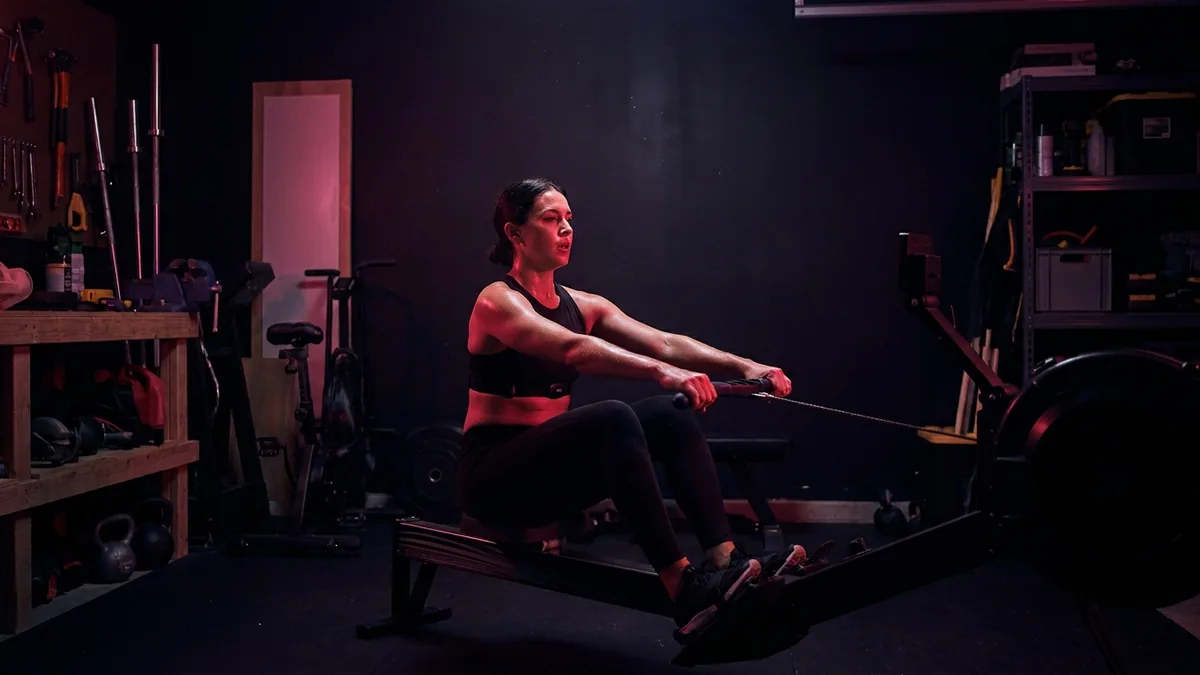
If you do Orangetheory Fitness (OTF) workouts, row ergometer sessions, or HIIT at home, you know the goal: spend at least 12 minutes in the Orange (Zone 4) and Red (Zone 5) heart rate zones to earn 12+ "Splat Points" and trigger the excess post-exercise oxygen consumption (EPOC) "afterburn" effect.
How Splat Points work in heart rate training
In Orangetheory workouts, Splat Points represent the number of minutes spent at or above 84% of your maximum heart rate (HRmax). That threshold is Orangetheory's own definition rather than a research finding, and it is the number any home setup has to reproduce to be comparable.
- Green Zone (Zone 3): 71% to 83% HRmax. Aerobic baseline zone for recovery and endurance.
- Orange Zone (Zone 4): 84% to 91% HRmax. Anaerobic threshold zone where Splat Points begin accumulating.
- Red Zone (Zone 5): 92% to 100% HRmax. Max effort interval zone awarding Splat Points.
The 12-minute goal is usually sold on the "afterburn", and the research is more interesting than the marketing. In their review "Effects of exercise intensity and duration on the excess post-exercise oxygen consumption," LaForgia, Withers and Gore gathered the EPOC literature and found that the effect rises exponentially with intensity. After a genuinely hard session, oxygen consumption can stay elevated for hours, in some studies up to 24.1 But they also put a number on how much that is worth: EPOC accounts for roughly 10% of the energy burned during the exercise itself, and they concluded that optimism about its role in weight loss is "generally unfounded."
So the hard minutes are worth chasing for what they do to you while you are doing them, not for an afterburn quietly working overnight. That is an argument for measuring the effort accurately, which is exactly what a Splat Point is trying to do.
Why studio equipment is not required at home
Many members assume you need an OTBeat Burn, Flex, or studio screen to calculate Splat Points during home workouts. In reality, studio armbands broadcast standard Bluetooth Low Energy (BLE) Heart Rate Measurement (0x180D) packets, just like any standard Polar H10, Garmin HRM, Coospo, or Wahoo chest strap. That is a published Bluetooth SIG profile, not a proprietary format, which is what makes any of these straps interchangeable.2
Which strap matters more than which app. In "Variable Accuracy of Wearable Heart Rate Monitors during Aerobic Exercise," Gillinov and colleagues had 50 adults exercise on a treadmill, bicycle and elliptical while a Polar chest strap and four optical wrist and forearm monitors were compared against ECG. The chest strap tracked ECG almost exactly (concordance 0.996) while the wrist monitors ranged from 0.81 to 0.92, and none of them was accurate on an elliptical with moving arm levers.3 Splat Points are minutes above a heart rate threshold, so a monitor that drifts at high intensity does not simply add noise, it changes your score.
Any Android phone can receive these open BLE heart rate streams and calculate real-time effort points without paying for proprietary studio subscriptions or cloud webhooks.
How to track Splat Points at home with ZonePoints
ZonePoints was designed specifically to bring gamified 5-zone HRR and effort point scoring to your home cardio, treadmill, and ergometer sessions.
- Universal BLE Strap Support: Connect any standard Bluetooth chest strap (Polar, Garmin, Coospo, Wahoo) or optical sensor directly on the home screen with zero account signup.
- 5-Zone HRR Model: Anchors your Orange and Red zone thresholds to Heart Rate Reserve (Karvonen formula), preventing inaccurate generic age-based max HR spikes.
- Real-Time Spoken Audio Alerts: Receive real-time headphone voice announcements when your heart rate enters the Orange and Red zones so you don't have to stare at your phone screen while rowing or running.
- Local Health Connect Sync: Automatically writes completed workout sessions and effort points to Google Health Connect, keeping 100% of your biometric data private on your device.
References
Try it on your next session
ZonePoints scores every workout from your heart rate. Free, no account, any Bluetooth strap.

- LaForgia J, Withers RT, Gore CJ. "Effects of exercise intensity and duration on the excess post-exercise oxygen consumption." Journal of Sports Sciences. 2006.
- Bluetooth SIG. Heart Rate Service (0x180D) specification. Bluetooth Special Interest Group.
- Gillinov S, Etiwy M, Wang R, et al. "Variable Accuracy of Wearable Heart Rate Monitors during Aerobic Exercise." Medicine & Science in Sports & Exercise. 2017.